
Full coverage or no background? Choosing for a pet portrait
Should you stitch the background of a pet portrait or leave the fabric bare? The difference in stitches, skeins and hours, with the same dog shown both ways.
By The Hoop & Paw team · Published · 2 min read
A full coverage pattern stitches every square, background included. A pattern with no background stitches only your pet and leaves the fabric bare around them. Both can look lovely — they just ask very different amounts of time.
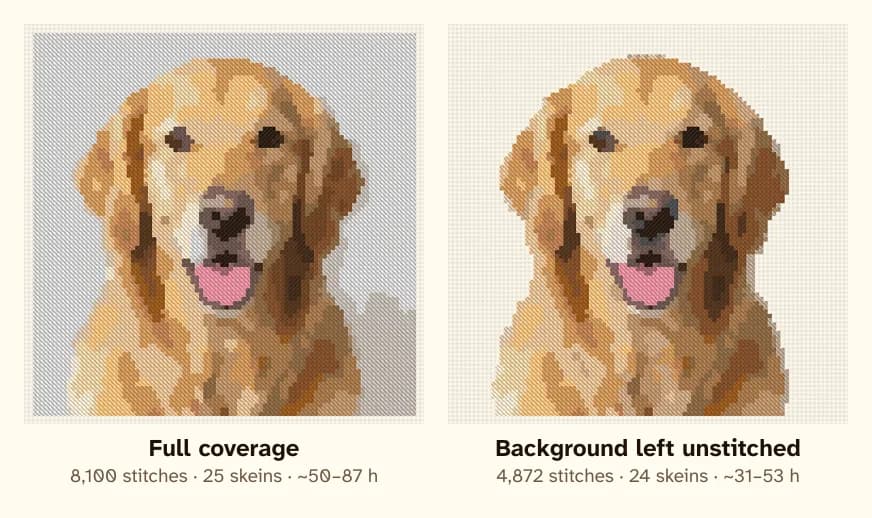
The difference in numbers
In the example above, the same dog at the same size needs about 40% fewer stitches and hours without the background. The number of skeins barely changes, because most colors need one skein either way — the savings are in time. On most pet photos, leaving the background unstitched saves 20 to 40% of the stitching.
When to stitch the background
- The setting matters to you: the garden they loved, their favorite chair.
- You want a painted, "picture" look that fills the frame edge to edge.
- Your pet is pale and needs a darker surround to stand out.
When to leave it
- You want the pet to be the whole story — a classic portrait or an ornament.
- The photo's background is busy or ugly (a kitchen, a car seat).
- Time matters: a first project, or a gift with a deadline.
In between
A stitched solid background in one thread color is a third option: quick to stitch (one color, big blocks), and it frames a white or cream pet beautifully. Our pattern maker offers all three under Background in the Advanced settings — and a plain background in the photo is detected and removed automatically.
Fabric color matters more without a background
When the fabric shows, its color becomes part of the design. Antique white or oatmeal suits most pets; pale blue or sage helps white dogs and cats stand out. Preview your pattern on different fabric colors before you buy fabric.