
How to cross-stitch fur that looks real
How to cross-stitch realistic pet fur: thread ramps for golden, black, white, tabby, merle and brindle coats, and how to stitch direction, texture and shine.
By The Hoop & Paw team · Published · 2 min read
Real fur is never one color. It's a ramp of shades from highlight to shadow, and the way those shades sit next to each other tells your eye whether the coat is short, fluffy, curly or glossy.
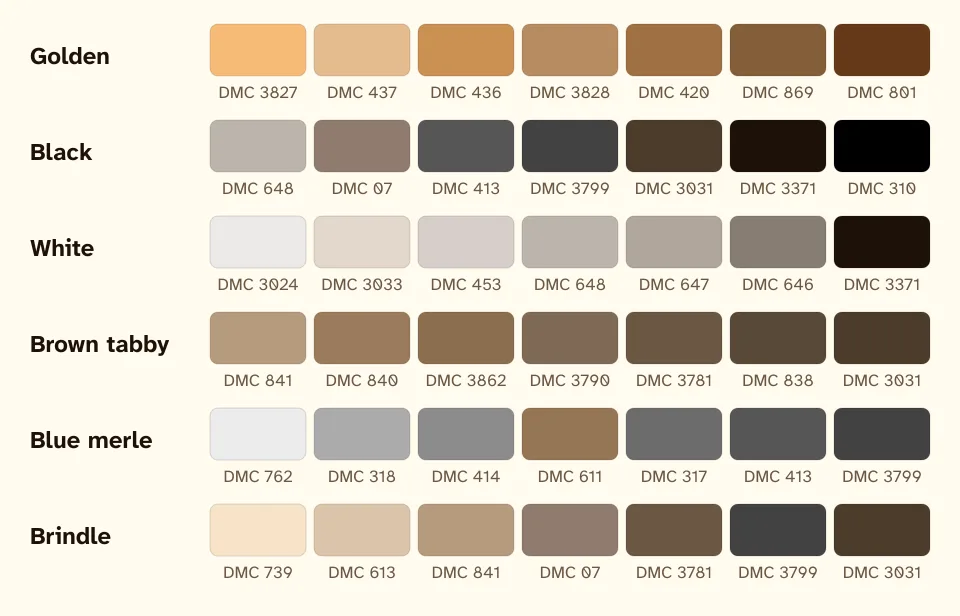
The ramps above are the main fur colors our pattern maker picked for six common coats, from lightest to darkest. Notice how many shades even a "black" or "white" coat needs.
Coats, one by one
- Golden and red coats: four to six warm browns and golds. Keep the lightest for the chest and ear edges, where the coat catches the light.
- Black coats: two blacks (310 and a softer 3371) plus cool dark grays for the shine on the head and shoulders. One black thread alone looks like a hole.
- White coats: cool grays and creams for the shadows — on white fabric, a white pet needs them or the outline disappears.
- Tabby: a light ground color, a mid and a dark stripe. Fewer colors keep stripes as bands instead of dots.
- Merle: gray-blues with dark patches. Keep the patches as shapes — that's what makes your dog's merle unique.
- Brindle: a warm base with dark stripes. Two or three stripe shades are plenty.
Texture without extra colors
The arrangement of shades creates texture. Long, wavy coats read as streaks running in the direction of the fur; short coats are smooth areas with gentle steps between shades. Our pattern maker keeps small details like these while merging meaningless speckles.
Stitching tips
- Stitch the darkest and lightest colors first; the mid-tones fill in around them and it's easier to see the shape early.
- Keep all your top stitches going the same direction — mixed directions catch the light differently and look patchy.
- Don't over-pull: fur looks softest when stitches sit full and plump.
See choosing DMC colors for your pet and our breed pages for coat-specific threads.